
Real Work for a Real Purpose: ALHFAM FARM Professional Interest Group Launches New Workshops in 2026
The ALHFAM FARM Professional Interest Group (PIG) is launching a multi-year initiative to fulfill the operative phrase of the ALHFAM mission statement: Sharing practical knowledge and skills. Besides a lineup of workshops and sessions for the annual conferences, we are launching Farmers Bootcamps at ALHFAM sites across the country that use the “ALL IN” approach to learning—fully engaged and fully doing.
2026 Farmers Bootcamps
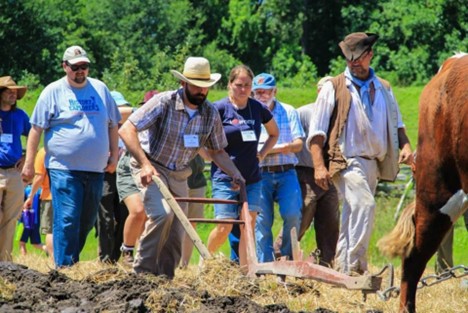
Plowing Bootcamp
Island Farm
Manteo, NC
March 14-15, 2026
Land Preparation: Plow, Harrow, Plant Bootcamp
Howell Living History Farm
Lambertville, NJ
September 2026 – date yet to be determined.
Thoughts from a Historic Farmer—
Real work for a real purpose: I came up with that phrase about 15 years ago to describe my approach to Historic Farming for the last 34 years. It’s simple: Really do the work. The word “demonstration” has always struck me as a not really approach and one that acts out the work rather than really doing it. This might sound like semantics, but words have power.
In the museum world, living history sites are not recreations of the past but representations and interpretations of it. Even still, I think that what we do should be real and authentic. And in this modern world, when we are not sure what is real and what is not, a “real work for a real purpose” approach resonates with our museums’ visitors.
This approach is not always easy in historic farming, as the rototiller or the tractor is always over in the shadows whispering, “Go ahead, just use me. It’s eeeassier…” Sure it is, but then what are we doing? Demonstration.
For me, I like to simplify things as much as possible. My approach to the seductive whispering from modern equipment is to put it through the authenticity funnel. The neck of a funnel allows me to look at it closely when modern means are an option. I examine the situation and ask myself: “Why am I doing this?” If the answer is: “It’s easier,” then I reconsider.
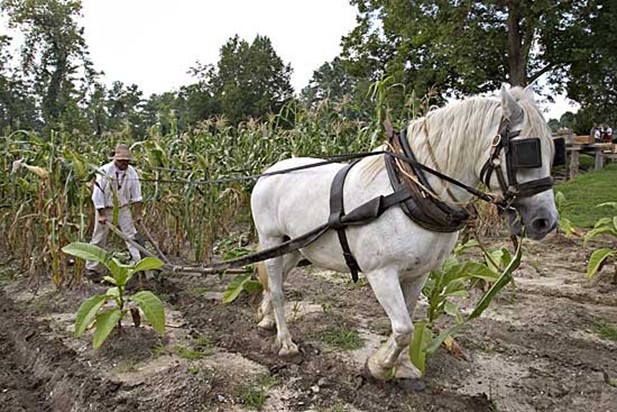
Imagine the following scenario: You have a big pile of manure that you need to move, and you have a solid team of oxen and a dump cart and two four-tine forks at your disposal. You also have a tractor. Which tools would you use? Which should you use? I remember a similar situation some 30 years ago when I found a fellow staff member moving manure with a front-end loader… because it was easier. I thought of this last week while I was at my home farm throwing heavy clay-based sand into a barn with a shovel. As my body moved and the dirt flew, I realized that I had figured out methods of using my body and the momentum of it to make it easier. With not much pain, it then became just time that was necessary to do this task. My mind drifted back to when I was a 21-year-old soldier digging a fighting position all night and hurting like hell afterwards. Here I am now, 63 years old, and don’t hurt as much after doing intense labor. How could this be? It’s all about form. And form can only come by doing the work with your body. And the pain can sometimes be the teacher to create form.
Only through real work can we understand the past, adapt our bodies (and minds) to the physicality of it, and present authenticity to our visitors—and they’ll thank us for it.
So, move the manure by a fork. Swing the axe. Harness the mules and get to plowing that furrow. We hope you’ll join us at a FARM PIG workshop in 2026 and go “ALL IN”!

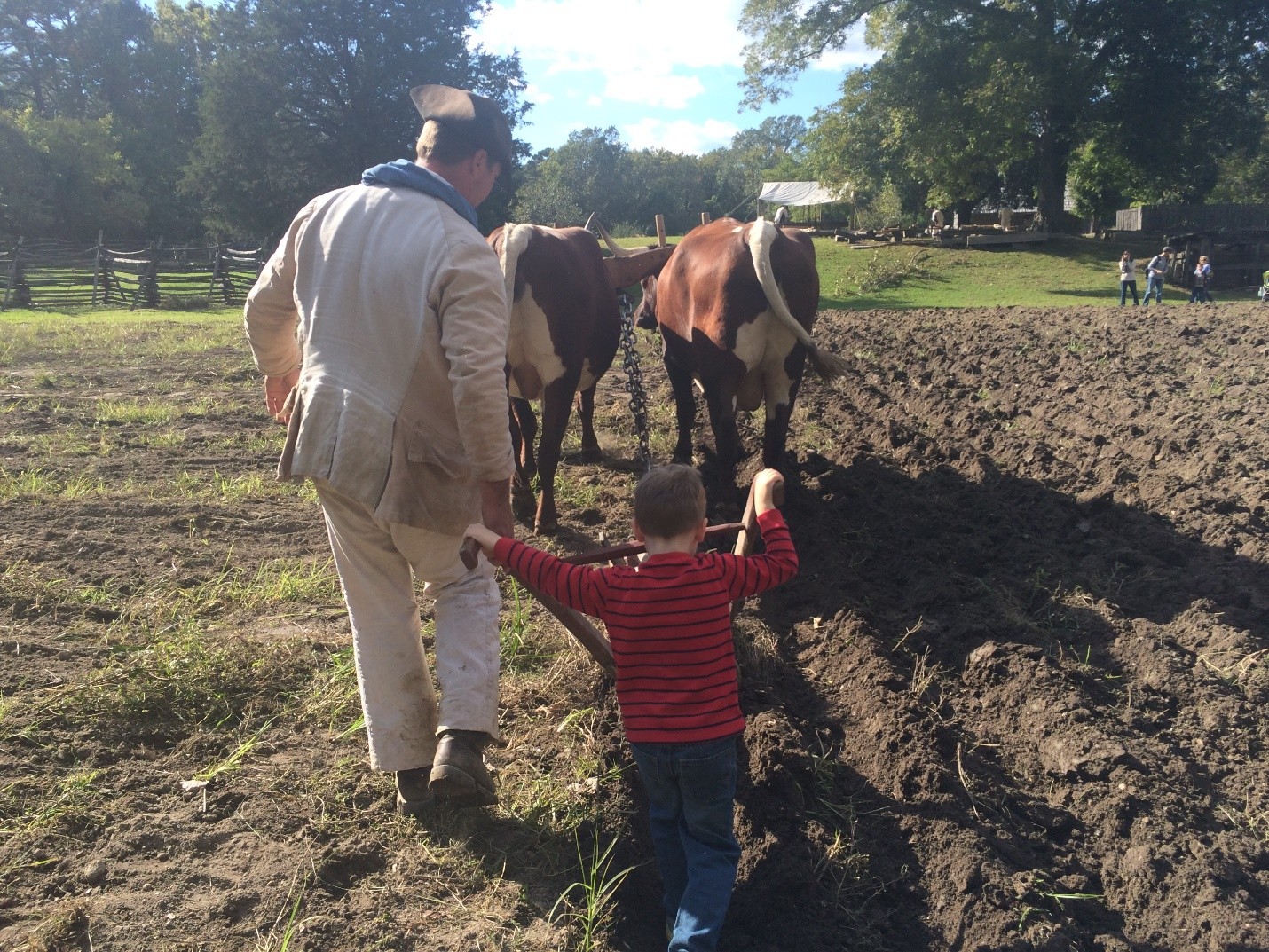

Ed Schultz currently serves as the Master Historic Farmer at Colonial Williamsburg. He has worked at historic sites across the United States for 34 years as an interpreter, site manager, director, and master tradesman, but he has always been a historic farmer. With a fervent belief in the operative statement of ALHFAM’s mission—”sharing practical knowledge and skills”—he serves on the Skills Training and Preservation (STP) Committee and as the chair of the FARM PIG (Professional Interest Group), having previously held that position from 2004-15. Ed was the 2019 recipient of ALHFAM’s Schlebecker Award. Farmer Ed lives with his family on a small subsistence farm in the marshes of Guinea, Virginia, where he can often be found plowing with his mule, George, or roaming the fields with his dog, Glenn.

 ALHFAM
Ed Schultz–thanks for your wisdom and knowledge. How did you get to be 63??
Hi Don. It’s been quite the journey! You helped me so much in those early years during the 1990’s in creating a livestock program at Historic Brattonsville. And we saw each other again in 2015 with oxen Duke and Dan. Thank you for all your and Livestock Conservancy’s help through the years.
Yes, it has been a journey. We are now living in Albuquerque and enjoying the Hispanic history of the Southwest. I am 85 and still active with Navajo-Churro sheep, espceially and the role the breed has played in Navajo, Pueblo, Hispanic and Anglo culture here. A whole new world, and that is what keeps us going. Cheers, Don
Real Work for a real purpose is a worthy mantra across the board! Works like a charm in the classroom teaching students the editing process using their own writing as a path toward publication. Hats off and cheers to Ed for all the straight furrows he’s plowed to make our progress smoother;) Blessed be.