

Past President Address – ALHFAM 2026
Jim Lauderdale
I joined ALHFAM and attended my first annual conference in 2012 at Farmer’s Branch, Texas. I had recently been hired as the Farm Manager of Nash Farm in Grapevine, Texas, and was eager to learn what ALHFAM was all about. I had been reading Proceedings articles from prior conferences for years and was excited about all that members could share in person. The theme of that conference was “Maintaining Relevance in a Digital Age.” Having recently begun using Facebook to promote programs at Nash Farm, I presented my first conference session, “From the Field to Facebook.”
Aside from the sessions, I quickly discovered the unique traditions that make ALHFAM special. At the Salted, Smoked and Pickled reception, I reconnected with old friends Ian Beard, Daniel Cockrelland Dave Fowler, while meeting members whose names I had previously known only through the Proceedings. I had the chance to talk with leaders like Pete Watson, Ed Schultz and Deb Reid, who generously shared their knowledge with a newcomer. And, of course, I experienced some of ALHFAM’s unforgettable traditions:the auction, the hospitality suite, Blake Hayes’ legendary ear stand, Lauren Muney’s bullwhip demonstration, and countless conversations that made me feel immediately welcome.
I also met with several members from Texas to discuss forming the Texas Living History Association, and before long we convinced Whit Edwards to serve as its first president.
I’m not sure how we fit so many memories and experiences into one week, but when I left that conference, I knew I had found an organization I believed in and wanted to remain part of for years to come.
As many of you know, I served as Vice President from 2021 to 2023, President from 2023 to 2025, and now have the privilege of serving as your Past President. Looking back over those years, I find myself reflecting on the people, experiences and relationships that have made this journey so meaningful.
When I stepped into leadership, our association—and our profession—was emerging from the challenges of COVID-19. Budgets were strained, staffing was limited and volunteers were stretched thin. Like many volunteer organizations, there was more work than the people we had to perform it.
One of our first major milestones was organizing our first in-person conference after the pandemic. Simply gathering together again—to shake hands, share a meal, visit museums, and learn side by side—reminded us that ALHFAM is more than a professional association.
It is a community.
We come together to exchange research, practical skills and professional advice that help us become better stewards of the institutions and stories entrusted to our care. But over time, colleagues become friends, friends become mentors and mentors become collaborators. That sense of community has always been ALHFAM’s greatest strength.
The strength of this organization has never been found solely in its bylaws, committees or annual meetings. Its strength comes from the people who willingly share their knowledge, support one another through challenges, celebrate successes and remain connected across great distances.
One of the things that has always impressed me about ALHFAM is the truly international nature of our membership. We are connected by a shared passion for preserving and interpreting agricultural and cultural heritage, regardless of geography. Through this association, we gain perspectives from different regions, institutions and traditions. Those exchanges enrich all of us and strengthen the work we do in our own communities.
During my time in leadership, we updated long-overdue standard operating procedures, established committees to address current issues affecting our membership and profession, advanced diversity initiatives and renewed our commitment to agriculture as a central part of our mission. None of these accomplishments happened because of one individual. They happened because members volunteered their time, accepted additional responsibilities and stepped forward to say, “I’ll help.”
For that, I am deeply grateful.
I also learned an important lesson during these years. Leadership in a volunteer organization is rarely about accomplishing everything on your list. If that is the measure of success, we will always fall short.
Instead, success comes from building momentum. It comes from creating structures that allow future leaders to succeed. It comes from leaving the organization a little stronger, a little more organized and a little better prepared for whatever challenges lie ahead.
And there will always be challenges ahead.
The museum field continues to evolve. Expectations from audiences continue to change. Funding remains a concern for many institutions. New technologies create opportunities as well as questions. We must continue to address issues of inclusion and representation thoughtfully and honestly. We must continue to recruit and mentor the next generation of museum professionals, interpreters, craftspeople, farmers and volunteers.
Yet I remain optimistic.
I remain optimistic because I have seen this organization’s generosity firsthand. I have watched members teach skills that took decades to master, travel hundreds of miles to help one another, openly share successes and failures and build friendships across institutions, generations and borders. Time and again, I have seen our members demonstrate resilience, creativity and dedication when circumstances seemed overwhelming.
Our work matters.
At a time when many people feel disconnected from the sources of their food, from traditional skills, from the land and from the experiences of earlier generations, we provide opportunities for meaningful connection. We help people understand not only how things were done, but why those stories continue to matter today.
That responsibility is important. But it is also a privilege.
As I conclude, I want to thank everyone who has supported me throughout my years on the board. Thank you to the board members, committee chairs, conference organizers, volunteers and members who dedicate so much of themselves to this organization.
Most of all, thank you for making ALHFAM what it is.
Organizations provide professional development. Conferences provide education. Communities provide belonging.
And that, in many ways, is what keeps us coming back year after year.
Thank you for your friendship, your dedication, your generosity and your commitment to preserving and sharing the stories that matter.
I look forward to seeing what we will accomplish together in the years ahead.
Thank you.
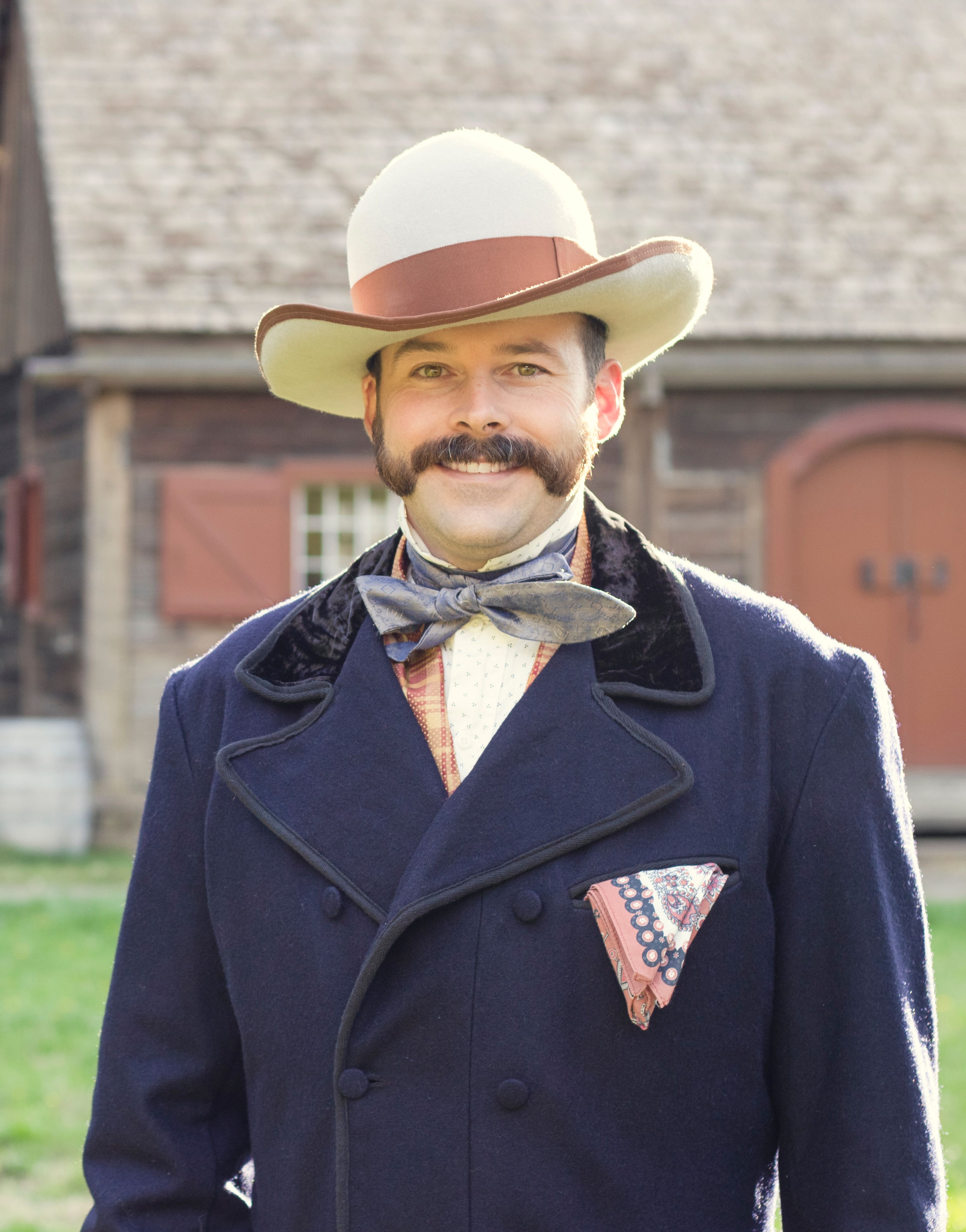
Jim Lauderdale is the Museum Director for Fort Nisqually Living History Museum in Tacoma, Washington and serves as ALHFAM’s current Past President. He joined ALHFAM and attended his first conference in 2012 at Farmer’s Branch, Texas. From that point forward, Jim has served as FARM PIG Chair, as an STP Committee Liaison, as a member of the Board of Directors, and Vice President and President. He has seen ALHFAM grow and change over the last few years, with an emphasis on virtual programming, hands-on workshops, better diversity, equity, accessibility and inclusion, and a desire to remain at the forefront of shaping living history, farm and agricultural museums of the future.


